
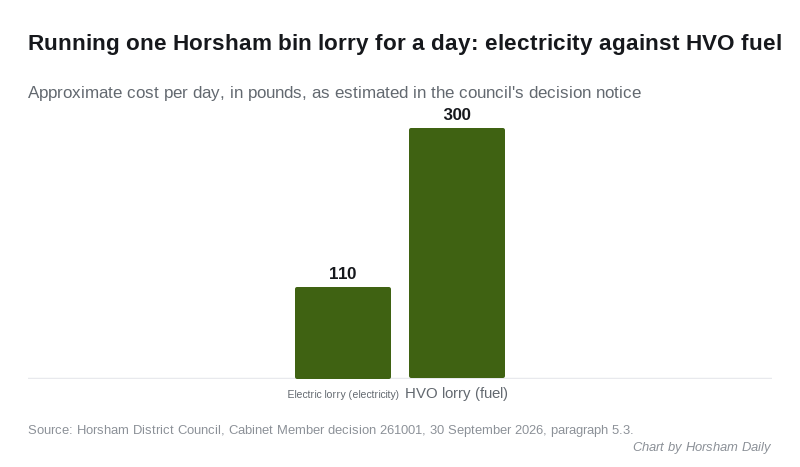
Horsham District Council will buy its first electric bin lorry for £475,000, plus about £20,000 of charging. Power costs about £110 a day against £300 for fuel.
Horsham District Council is buying its first electric bin lorry. The vehicle, with its body and bin lift, will cost £475,000. Installing a charger for it will cost about £20,000 more.
The decision was signed on 30 September by Councillor David Skipp, the Cabinet Member for Environmental Health, Recycling and Waste. It was published on 1 October (Horsham District Council decision notice).
Updated 21 November: Cabinet approved the nine HVO lorries on 18 November, and recommended a £2.2m budget to Full Council. Its decision says the electric lorry will be trialled for a year, to check it can complete all the rounds in various weather conditions (Cabinet decisions, 18 November 2026, PDF). The full story is in our report on the nine new bin lorries.
Updated 9 October: no councillor called the decision in. The council’s decisions register shows the call-in period expired on 8 October, so the purchase is in force from 9 October and the Head of Recycling and Waste can award the contracts (decision register).
Updated 6 October: the council’s latest Forward Plan, published on 1 October, lists a separate Cabinet decision due on 18 November: the purchase of eight 26-tonne bin lorries and one 16-tonne lorry, all to run on HVO fuel rather than electricity. It is a key decision, worth more than £500,000, and the report will be partly confidential. No figures are published yet (Forward Plan entry).
Why one lorry, and why now
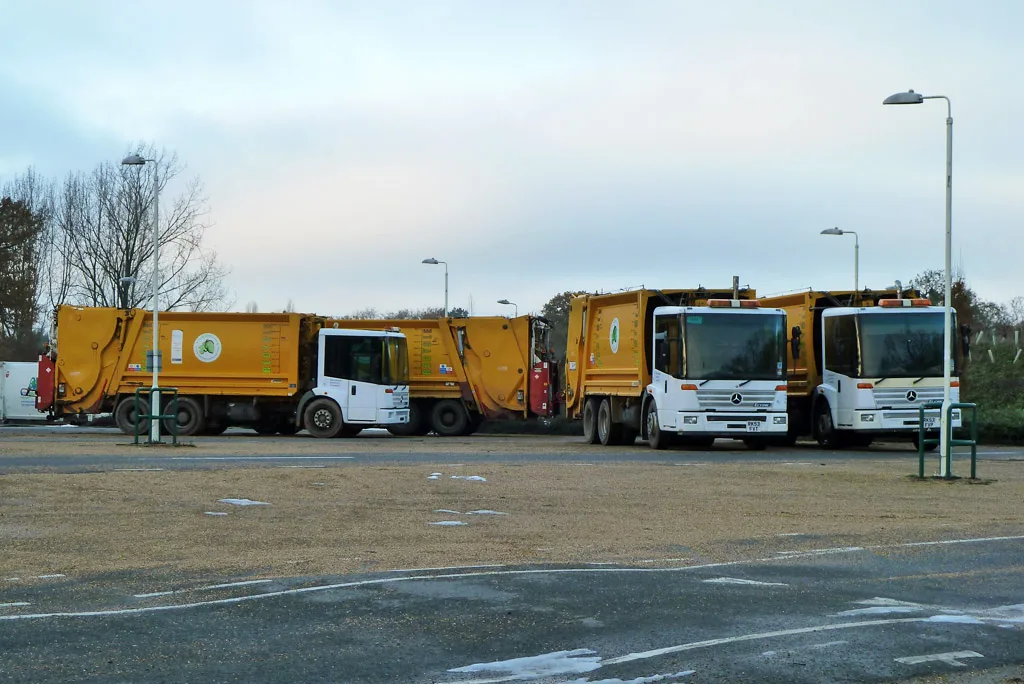
Nine of the council’s bin lorries need replacing, the decision notice says. These are the large 26-tonne vehicles that make up most of the collection fleet. On average they collect from 65,000 properties across about 204 square miles.
The electric lorry will replace one of the nine. The council wants to run it on a normal round first, to test its range, maintenance costs and reliability. That will decide whether every bin lorry eventually goes electric. Earlier trials of electric lorries showed they had the range for the work, according to the notice (decision notice, PDF).
The money
The notice sets out the figures:
- £475,000 for the lorry, including the body and bin lift
- about £20,000 to buy and install the charging equipment
- about £110 a day in electricity, against about £300 a day for a lorry running on hydrotreated vegetable oil (HVO)
- no extra staff, because it will work an existing main round
An electric lorry costs more to buy. But the council’s analysis says it works out cheaper than a diesel or HVO lorry over seven years.
The capital programme for 2026/27 had money for two electric vehicles. The council is buying one. On 3 September its Director of Resources moved that budget into 2027/28 because of delivery times. Current lead times are around 14 months, the notice says, and could grow as other councils place orders.
The alternatives it turned down
Two other options were considered and rejected:
- an HVO lorry, because it would not help the council reach its aim of net zero emissions by 2030
- converting an existing lorry to electric, because the old vehicle would need refurbishing to a high standard, which the council says is not always possible, and it would not meet the safety standards of a new one
Based on trial figures, the council expects the electric lorry to save 143kg of carbon dioxide a day compared with an HVO lorry. On one trial day, 42kWh of energy was recovered from braking and put back into the batteries.
What it means for you
- Nothing changes on your bin day. The new lorry will work an existing round. Your collection day is on our Horsham bin collection days page.
- It will not be on the road soon. With lead times of around 14 months, and the budget moved into 2027/28, the purchase is a 2027 story.
- The decision was not called in. Councillors had until 8 October to call it in for scrutiny, and none did. It took effect on 9 October, and the Head of Recycling and Waste now awards the contracts.
Have your say