
Horsham District Council expects its cash to fall from £76m to £30m by March 2028, as a £30m capital programme draws on reserves before the council is replaced.
Horsham District Council expects the cash it holds to fall from £76m to £30m in two years. The drop comes as it spends heavily on buildings, vehicles and other projects before it is replaced by a new unitary council.
The forecast is in the council’s Capital Strategy for 2027/28, which goes to its Audit Committee on Wednesday 25 November (Capital Strategy report). Finance officers write that the programme will leave the council “in a much-weakened financial position as it hands over to a successor body”.
The numbers
The council’s capital programme, its spending on assets that last more than a year, is far bigger than usual:
| Year | Capital spending | Paid from the council’s own money |
|---|---|---|
| 2025/26 (actual) | £14.3m | £5.2m |
| 2026/27 (forecast) | £24.4m | £14.9m |
| 2027/28 (estimate) | £30.6m | £15.6m |
| 2028/29 (estimate) | £8.1m | £3.7m |
The rest comes from grants and contributions from outside the council. No new borrowing is planned. The 2027/28 figure already includes £2.5m of projects expected to slip from this year.
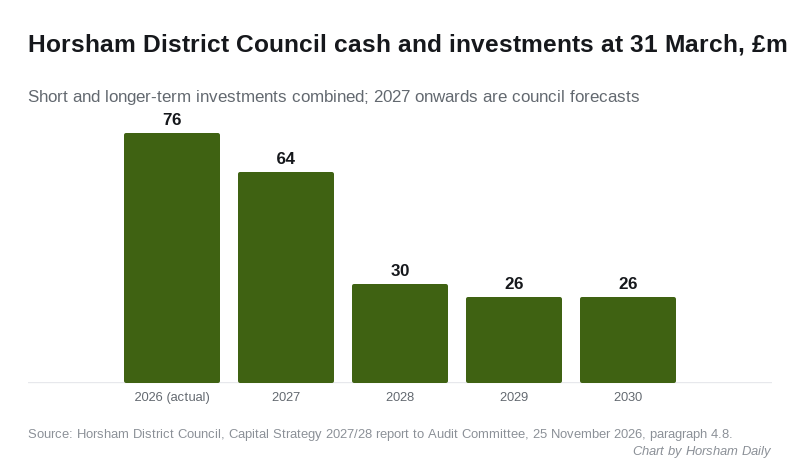
Because the council pays its share from cash rather than loans, its cash balances shrink. It forecasts:
- £76m at 31 March 2026 (actual)
- £64m at 31 March 2027
- £30m at 31 March 2028
- £26m at 31 March 2029 and 2030
The report does not list the projects. It does name a capital loan for the Dukes Square housing scheme. A separate report to Cabinet put the cost of nine new bin lorries at up to £2.2m in 2027/28. The full programme goes to Cabinet in January and Full Council in February.
What officers say it means
The report says reserves “will be depleted although still over the £6m minimum level”. With less cash in the bank, the council will earn less interest.
It adds that the spending “would then increase the pressure on the financial security of the Council’s successor authority and its ability to balance its future budgets”. The government’s current timetable replaces West Sussex’s district and county councils on 1 April 2029, as we reported on 1 November.
At 31 March 2026 the council held £27.2m of general reserves and £25.6m of earmarked reserves, the money set aside for specific purposes. That is according to its Statement of Accounts 2025/26.
The council also owns £58m of commercial property in the district. It earned a net return of 7.1% last year. The report warns that “risks to income persist especially in the retail part of the portfolio”.
Auditors expect a qualified opinion
The same committee will hear from the council’s auditors, Ernst & Young. They expect to give a “qualified” opinion on the 2025/26 accounts (EY Audit Results Report). A qualified opinion means the accounts are fine except for specific areas the auditor could not fully check.
It is still an improvement. EY issued no opinion at all, a “disclaimer”, on the 2023/24 and 2024/25 accounts. The council’s report says the problem stems from a disclaimer on its 2022/23 accounts, the last year covered by the government’s deadline to clear a national backlog of council audits. EY says the remaining gaps are:
- some reserve balances
- the historic values of land, buildings and equipment
- the income and expenditure statement
EY expects a clean opinion “may be possible by 2028/29”. It does not expect to report any significant weakness in how the council secures value for money. The council’s own report says the audit found leased assets “incorrectly classified or not recognised” and that management is considering what adjustments are needed (Statement of Accounts report).
What it means for you
Nothing changes for residents yet. Council tax is set in February, and the budget gap forecast for the next three years is in our report on the council’s budget.
The cash forecast matters later. A council with £30m in the bank instead of £76m has less to fall back on if a project runs over or rent from its shops drops. It will also hand less to the new council that takes over its services in 2029.
The Audit Committee meets at 5.30pm on Wednesday 25 November. It is asked to comment on the strategy, which Cabinet then recommends to Full Council with the 2027/28 budget.
Have your say